Apple & Google Spy Planes Are Looking At You!

Spy Planes

Spy Planes

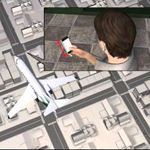
Apple and Google are using military-grade spy planes to map your backyard. That’s the sensationalist headline. I like it. It’s really scary and it’s perfect for Fud-mongering. (FUD is an abbreviation for fear, uncertainty and doubt.) Similar headlines have everyone from privacy advocates to private citizens up in arms. After all, the 17th century proverb, “good fences make good neighbors” has no meaning in the age of spy planes. According to some reports, the resolution of the spy cameras is so good, that you can see objects as small as 4 inches. Other reports foretell of the capability to see through skylights and open windows – all kidding aside, it’s pretty creepy.

But whether this particular use case creeps you out or not, the creep factor is not the issue. The issue is framed by the question, “Is there any reasonable expectation of privacy in the 21st century?”

I submit that this is the perfect time to start a dialog about what privacy is, what it is not and what rights we should reasonably expect.

To start this dialog, we need to understand the full nature of the technological capability we are up against. Apple and Google using military-grade tools to create better way-finding tools for their maps and other applications is actually pretty benign. Want to think about surveillance? Great, let’s think about it the right way.

Within a couple of years, file storage will be inexpensive enough and computers will be small and powerful enough to create work environments that are under Star Trek-like audio/video surveillance 24/7. This might mean, for example, that every conversation you have at your job – no matter where it is and no matter who it is with – will be recorded and analyzed. The computer programs will be trained to understand what you are saying, syntax, context and to flag anything that is deemed inappropriate or un-business-like. Forget the totally lame; “This call is being recorded for quality assurance,” they’re going to record everything.

Does this sound Orwellian or paranoid? It may. But unless you assume that the technology is already in-place, you can’t start thinking about writing rules and laws or even setting guidelines. I promise you, the capability to spy on your every word, movement, email and electronic transaction is already in place – the only thing that is missing is a cost-effective way to deal with the explosive amounts of data that this type of surveillance generates – and that capability is easily within sight.

Right now companies asking you to store your music and movies in the cloud are bombarding you. That’s a good use of cloud technology, but you know what it’s really great for? It’s great for big audio/video surveillance files. In fact, it’s the best place for them because cloud storage is easily accessed by cloud computers – and cloud computers have the capacity to crunch extremely large files.

So, now that you are thinking about an invasion of your privacy so deep that it is actually disturbing, what should we do? How should we start to sort out the issue? What are the questions you want to ask? What are the guidelines you will insist upon?

If, under some circumstances, you might be willing to be observed in this way, who should have access to the data? Should anyone be allowed to correlate it to other data, such as medical or financial records?

I’ve often wondered how much money could be saved (and earned) by simply using EZ-pass data to issue speeding tickets. If the speed limit is 55 mph and you go through two toll booths in less time than it should take you at 55 mph, you are unequivocally guilty of speeding. Why don’t they just put a few high-speed EZ-pass lanes on the highway, fire the cops, and send tickets in the mail? It would be easier, cheaper and a much better profit center.

OK, now, expand this to everything you do? No matter how good your imagination is, no matter how much science fiction you’ve read, you’re going to come up short on the ways this kind of surveillance data can be obtained and used.

So let’s take some action. Contact your elected officials and tell them how you feel about privacy. Your privacy. My privacy. Everyone’s privacy. What are we as a society willing to give up for the quality of our digital enjoyment? It’s “the” question of our time.

Author:

Shelly Palmer

Shelly Palmer is Fox 5 New York's On-air Tech Expert (WNYW-TV) and the host of Fox Television's monthly show Shelly Palmer Digital Living. He also hosts United Stations Radio Network's, Shelly Palmer Digital Living Daily, a daily syndicated radio report that features insightful commentary and a unique insiders take on the biggest stories in technology, media, and entertainment. He is Managing Director of Advanced Media Ventures Group, LLC an industry-leading advisory and business development firm and a member of the Executive Committee of the National Academy of Television Arts & Sciences (the organization that bestows the coveted Emmy® Awards).

  • jayou

    Shelly, I must say that your article this Sunday Morning poses a very serious and disquieting question. Has technology finally arrived at the point where it controls us rather than the other way around? There’s little question that the advancement of our digital technology has brought some wonderful advantages to mankind!
    Unfortunately, in a capitalistic society, those advantages are viewed not just as beneficial to mankind, but as a source of great wealth if effectively exploited. The privacy issue looms very large as the monetary potential increases. As we examine the benefits of the digital world, we also have to examine the motives that some entrepreneurs might find attractive in the Capitalistic sense.
    It would seem that Privacy, as precious as it is to many of us, is just another commodity for some to buy and sell at our expense. As you examine privacy at it’s core, what boundaries would best serve the general public interest and who could control the ultimate description of “Privacy”? Those who would endeavor to profit from data-mining would argue that almost nothing is sacred where information is concerned. That’s only from the entities that are looking at the data market from a purely financial point of view. What about Politics, the Military and where that animal would lead the decision making process??
    Technological advancement may be a double edged sword with benefits and pitfalls that are about to create yet another “slippery slope” for human beings to face and cope with.
    I have no idea what the solution is to this very controversial question. But I thank you for posing the subject for us to consider!

  • Hollywood5459

    Can you live a happy, productive life without 3D, detailed maps, find another way to collect music than cloud or store info without it, too, and still have a productive life? Are you OK to find out you cannot do something or have something because you have done something that is not within the realm of those who watch you ? The concept of “I can have everything I want when I want it how it want it when I want it ” with no regards to how those affect anyone else and anything else for selfish demands for immediate gratifications results in chaotic misinformation and destruction. Humanity and intelligence decline. Profiteers tend to live a vacuum and molesters groom their subjects. 

  • anonymous

    Shelly and others wrote volumes about location-based mobile tracking
    when that concern arose about Apple and Android smartphones last year.  Of course this whole issue has been creeping up on us for a long time.  Public reactions have, by and large, been too late. 

    IP technology has enabled multiple public network-based ways to track you, and they are in place and pervasive.  One is to locate a device by IP address over the Internet.  Another is enabled in the networks of Tier 1 Telcos through NGN and
    IMS technologies http://en.wikipedia.org/wiki/IP_Multimedia_Subsystem .  Another is the deep packet inspection that the larger
    pay TV providers use, in order to prioritize pay traffic and to detect video piracy – which is easily associated with your devices. 

    Sometimes, public outcry has appeared to have some effect.  There was a fair amount of citizen push-back against surveillance cams in the UK.  The same has been happening in the U.S – and several towns here in WA have instituted bans or roll-backs.  These sound like small victories, but you can assume that ‘anti-terrorist’ concerns will continue to trump all of this. 

    Wired ran a long article a few months ago about the NSA data center in
    Utah.  Remember when the NSA was caught tapping into an AT&T peering
    point in San Francisco about 10 years ago? Not to mention CALEA (“lawful intercept”) – which mandates a back-door in all telecom networks, and has been in place for years.   If a service provider in the US is not in compliance, the penalty is $10K/day.  You don’t hear about it because it also mandates severe penalties for service provider employees that talk about it.

    Similar measures are in place in other countries.

    Nope, the cat is long out of the bag.

  • http://www.facebook.com/phil.bogle Phil Bogle

    The LAST thing most corporations would want is to record every off-the-record conversation that employees have.

    Recorded conversations are subject to subpoena, search, and out of context interpretation in every random lawsuit that comes along.  Remember how much trouble Microsoft had as a result of confidential emails becoming public.

  • FifthHorseman

    Hate to awaken you people, but the Federal, State, County, and even your City have been doing it for years. Your TV and Radio stations have aircraft aloft to how road traffic is moveing. If you have been flying long enough you get to see it all. Think of all those young well trim ladies as they soak up the sun rays in their backyards. A better sight then the cows who do similar things.
    It is cheaper to have an aircraft fly over an area than send it a person on foot. Just to count the deer population, where they are, what they are eating, and what they are destorying. Farmers use it to look at the health of their crops. The State use it to look for farmers who are gowing plants that you smoke.
    Aircrafts are getting smaller. Cities are using unmanned aircraft. Night craft who is looking for those who are up too no gooded. It beats a patol car.
    It is not your airplane model maker anymore. It is not just planes, they have little blimps that hover, they can stay over a city park all night, video all that goes on in a given space.

  • FifthHorseman

    There was an unmanned aircraft, used in Iraq, that used to fly over an area. It was silent and could be deadly since it carried its own fire power. Small caliber .22 weapons. It is main job was to look at roof tops. The video was lived to a army patol. The heat signature of a weapon is different than a human being. If you had one you were toast.
    The .22 bullets were reported to be green lead.
    Similar aircraft flying over LA at night has been reported, either that or it was a very large owl.
    Consider the vastest of land on this planet to be photography. Your worrying that the big bad brother will single you out and see your junk pile.
    The best time for a fly over is in the winter time, when there is no leaf cover.
    The only way your going to see if your backyard is if you go on their site and bring up your back yard.
    By the way. That little old lady thatwaves at you each day, she is spying on you.